IndiaBIX
IndiaBIX
Start typing & press "Enter" or "ESC" to close
  • Home
  • Jobs
  • Results
  • Current Affairs
  • GK
  • Online Test
  • HR Interview
  • BLOG

Chemical Engineering Thermodynamics - Section 1 (2)

  • Home
  • Chemical Engineering
  • Chemical Engineering Questions and Answers
  • Chemical Engineering Thermodynamics - Section 1
Directions to Solve

Chemical Engineering Thermodynamics - Section 1

Fuels and Combustion is a field and there are problems available to
solve in this category. You will find the MCQs and can solve them easily.

9. 

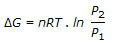
The expression, 421-427-1, gives the free energy change

A. with pressure changes at constant temperature.
B. under reversible isothermal volume change.
C. during heating of an ideal gas.
D. during cooling of an ideal gas.

Answer: Option A

Explanation:

No answer description available for this question. Let us discuss.

View Answer Discuss Workspace Report

10. 

Equilibrium constant decreases as the temperature

A. increases, for an exothermic reaction.
B. decreases, for an exothermic reaction.
C. increases, for an endothermic reaction.
D. none of these.

Answer: Option A

Explanation:

No answer description available for this question. Let us discuss.

View Answer Discuss Workspace Report

11. 

Which of the following is a thermodynamic property of a system ?

A. Concentration
B. Mass
C. Temperature
D. Entropy

Answer: Option D

Explanation:

No answer description available for this question. Let us discuss.

View Answer Discuss Workspace Report

12. 

In any spontaneous process,

A. only F decreases
B. only A decreases
C. both F and A decreases
D. both F and A increase

Answer: Option C

Explanation:

No answer description available for this question. Let us discuss.

View Answer Discuss Workspace Report

13. 

Pick out the correct statement:

A. In an isothermal system, irreversible work is more than reversible work.
B. Under reversible conditions, the adiabatic work is less than isothermal work.
C. Heat, work, enthalpy and entropy are all 'state functions'.
D. Matter and energy can not be exchanged with the surroundings in a closed system.

Answer: Option B

Explanation:

No answer description available for this question. Let us discuss.

View Answer Discuss Workspace Report

14. 

Out of the following refrigeration cycles, which one has maximum COP ?

A. Air cycle
B. Carnot cycle
C. Ordinary vapor compression cycle
D. Vapor compression with a reversible expansion engine

Answer: Option B

Explanation:

No answer description available for this question. Let us discuss.

View Answer Discuss Workspace Report

15. 

In a reversible chemical reaction (where, Δx = number of moles of products-number of moles of reactants )

A. addition of inert gas favours the forward reaction, when Δx is positive.
B. pressure has no effect on equilibrium, when Δn = 0.
C. addition of inert gas has no effect on the equilibrium constant at constant volume for any value of Δx (+ ve, - ve) or zero).
D. all 'a', 'b' & 'c'.

Answer: Option D

Explanation:

No answer description available for this question. Let us discuss.

View Answer Discuss Workspace Report

16. 

1st law of thermodynamics is nothing but the law of conservation of

A. momentum
B. mass
C. energy
D. none of these

Answer: Option C

Explanation:

No answer description available for this question. Let us discuss.

View Answer Discuss Workspace Report

  • 1
  • 2
  • 3
  • 4
  • 5
  • 6
  • 7

Questions & Answers

Aptitude Chemical Engineering Civil Engineering Computer Science & Engineering Current Affairs Data Interpretation Electrical & Electronics Engineering Electronics & Communication Engineering General Knowledge Logical Reasoning Mechanical Engineering Non Verbal Reasoning Verbal Ability Verbal Reasoning

Interviews

HR Interview

Jobs

Sarkari Jobs

Results

Rojgar ResultSarkari Result

Admission

Admission 2023

Admit Card

Admit Card 2023

Answer Key

Answer Key 2023
copyright
Privacy Policy
© 2026 IndiaBIX. All Rights Reserved.

Report