IndiaBIX
IndiaBIX
Start typing & press "Enter" or "ESC" to close
  • Home
  • Jobs
  • Results
  • Current Affairs
  • GK
  • Online Test
  • HR Interview
  • BLOG

Chemical Reaction Engineering - Section 1 (2)

  • Home
  • Chemical Engineering
  • Chemical Engineering Questions and Answers
  • Chemical Reaction Engineering - Section 1
Directions to Solve

Chemical Reaction Engineering - Section 1

The MCQs related to Chemical Reaction Engineering
are available in this section and you can solve the problems to test your skills.

9. 

Pick out the correct statement.

A. In catalytic reactions, the catalyst reacts with the reactants.
B. A catalyst initiates a chemical reaction.
C. A catalyst lowers the activation energy of the reacting molecules.
D. A catalyst can not be recovered chemi cally unchanged at the end of the chemical reaction.

Answer: Option C

Explanation:

No answer description available for this question. Let us discuss.

View Answer Discuss Workspace Report

10. 

For a solid catalysed chemical reaction, the effectiveness of solid catalyst depends upon the __________ adsorption.

A. physical
B. chemical
C. both (a) and (b)
D. neither (a) nor (b)

Answer: Option B

Explanation:

No answer description available for this question. Let us discuss.

View Answer Discuss Workspace Report

11. 

The excess energy of reactants in a chemical reaction required to dissociate into products is termed as the __________ energy.

A. activation
B. potential
C. binding
D. threshold

Answer: Option A

Explanation:

No answer description available for this question. Let us discuss.

View Answer Discuss Workspace Report

12. 

Radioactive decay follows __________ order kinetics.

A. first
B. second
C. third
D. zero.

Answer: Option A

Explanation:

No answer description available for this question. Let us discuss.

View Answer Discuss Workspace Report

13. 

BET apparatus

A. measures the catalyst surface area directly.
B. operates at very high pressure.
C. is made entirely of stainless steel.
D. none of these.

Answer: Option D

Explanation:

No answer description available for this question. Let us discuss.

View Answer Discuss Workspace Report

14. 

For a zero order chemical reaction, the

A. half life period is directly proportion to the initial concentration of the reac-tants.
B. plot of products concentration with time is a straight line through the origin.
C. products concentration increases linerarly with time.
D. all (a), (b) and (c).

Answer: Option D

Explanation:

No answer description available for this question. Let us discuss.

View Answer Discuss Workspace Report

15. 

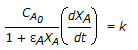
For an isothermal variable volume batch reactor, the following relation is applicable for a first order irreversible reaction.

A. XA = k . t
B. 471-425-1
C. -ln(1 - XA) = kt
D. εA . ln (1 - XA) = k . t

Answer: Option B

Explanation:

No answer description available for this question. Let us discuss.

View Answer Discuss Workspace Report

16. 

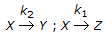
For the irreversible elementary reactions in parallel viz 455-247-1 , the rate of disappearance of 'X' is equal

A. CA(K1+K2)
B. CA(K1 + K2)/2
C. CA . K1/2
D. CA . K2/2

Answer: Option A

Explanation:

No answer description available for this question. Let us discuss.

View Answer Discuss Workspace Report

  • 1
  • 2
  • 3
  • 4
  • 5
  • 6
  • 7

Questions & Answers

Aptitude Chemical Engineering Civil Engineering Computer Science & Engineering Current Affairs Data Interpretation Electrical & Electronics Engineering Electronics & Communication Engineering General Knowledge Logical Reasoning Mechanical Engineering Non Verbal Reasoning Verbal Ability Verbal Reasoning

Interviews

HR Interview

Jobs

Sarkari Jobs

Results

Rojgar ResultSarkari Result

Admission

Admission 2023

Admit Card

Admit Card 2023

Answer Key

Answer Key 2023
copyright
Privacy Policy
© 2026 IndiaBIX. All Rights Reserved.

Report